
How and Why to Map Your Tracks’ Genres, Tempos, and Cue Types Upon Entering a Sub-Publishing Agreement
Updated May 3, 2023
Mapping is a feature that allows you, the original rights owner of the tracks being synced to another site, to maintain total control of where and how your tracks display within the genre, tempo, and cue type parameters of the site they are being synced to.
When you map your genres/tempos/cue types, you’re assigning the genres/tempos/cue types from your site to correspond to the genres/tempos/cue types of the sites your tracks sync to, so that your tracks appear under their genres according to your exact preference.
To begin mapping content that has been synced to other sites, start by heading to your Admin Panel > Manage Metadata > Fields > and click to expand the bottom-most drop down, “Mapping”. Next click the “Select a Site To Map” drop-down, where you can see a list of all the sites that you have tracks syncing to. You’ll also notice the topmost option simply reads “SourceAudio Standard” and you may have some or all of the sites that appear in this drop-down display “(using SourceAudio Standard)” next to their name. This simply means that the site has not customized their genres/tempos/cue types at all. The mapping that you do on the SourceAudio Standard listing will apply to all of these sites. Sites that don’t display “(using SourceAudio standard)” next to their name, have customized their genres/tempos/cue types and will need to be mapped one by one.
Once you’ve selected either SourceAudio Standard or the site you’d like to map from the “Select a Site To Map” drop-down, you can begin mapping each of your genres/tempos/cue types seen on the left to appear under one of the genres/tempos/cue-types seen on the right. When one of your genres/tempos/cue types is mapped, it will turn from red to green, so you can easily keep track of what’s been mapped, vs what still needs to be mapped.
When you’re all done, scroll to the bottom and click to save.

How Music For Sport runs a 180-album catalog across territories
Music For Sport has supplied music to every Summer and Winter Olympic Games since 1992. More than three decades and 180-plus albums later, the UK company's job hasn't changed: put high-quality production music in front of broadcas...[ READ MORE ]


YouTube Shorts monetization is now live. Here's what else is new in June.
June was a build-heavy month across our licensing, YouTube, and Collect businesses. We launched a major upgrade to our music-monitoring service, invested in faster and more accurate royalty processing, moved several enterprise integrations...[ READ MORE ]

The operational side of maximizing catalog revenue
One of the clearest indicators of long-term catalog health is whether there’s a real system of record behind it. By that we mean: a single place where the rest of the business can quickly confirm what a work is, who owns it, what iden...[ READ MORE ]

May at a Glance: A Product Update, the Brief Inbox, and a New AI Podcast
The Brief Inbox didn't slow down in May, and neither did we. Column customization shipped, and Drew made an appearance on Morning Brew's new AI podcast to talk music and AI. Drew on The Intelligence Shift Drew Silverstein, our Presid...[ READ MORE ]

Why Brands Are Moving Toward Aggregator-Driven Music Licensing
The way music gets licensed for advertising is changing at the infrastructure level. More brands and agencies are moving toward aggregator-driven ecosystems, where platforms like SourceAudio plug directly into proprietary music discover...[ READ MORE ]

April Recap: Luminate Summit, Blog Post, and What's Coming Through the Brief Inbox
Andrew Talks AI Training Data at Luminate Summit On April 15, SourceAudio CEO and co-founder Andrew Harding joined Doug Shapiro, Dave Davis, Dustin Blank, and Matthew Adell on "The AI Training Data Economy" panel at the Luminate Dat...[ READ MORE ]
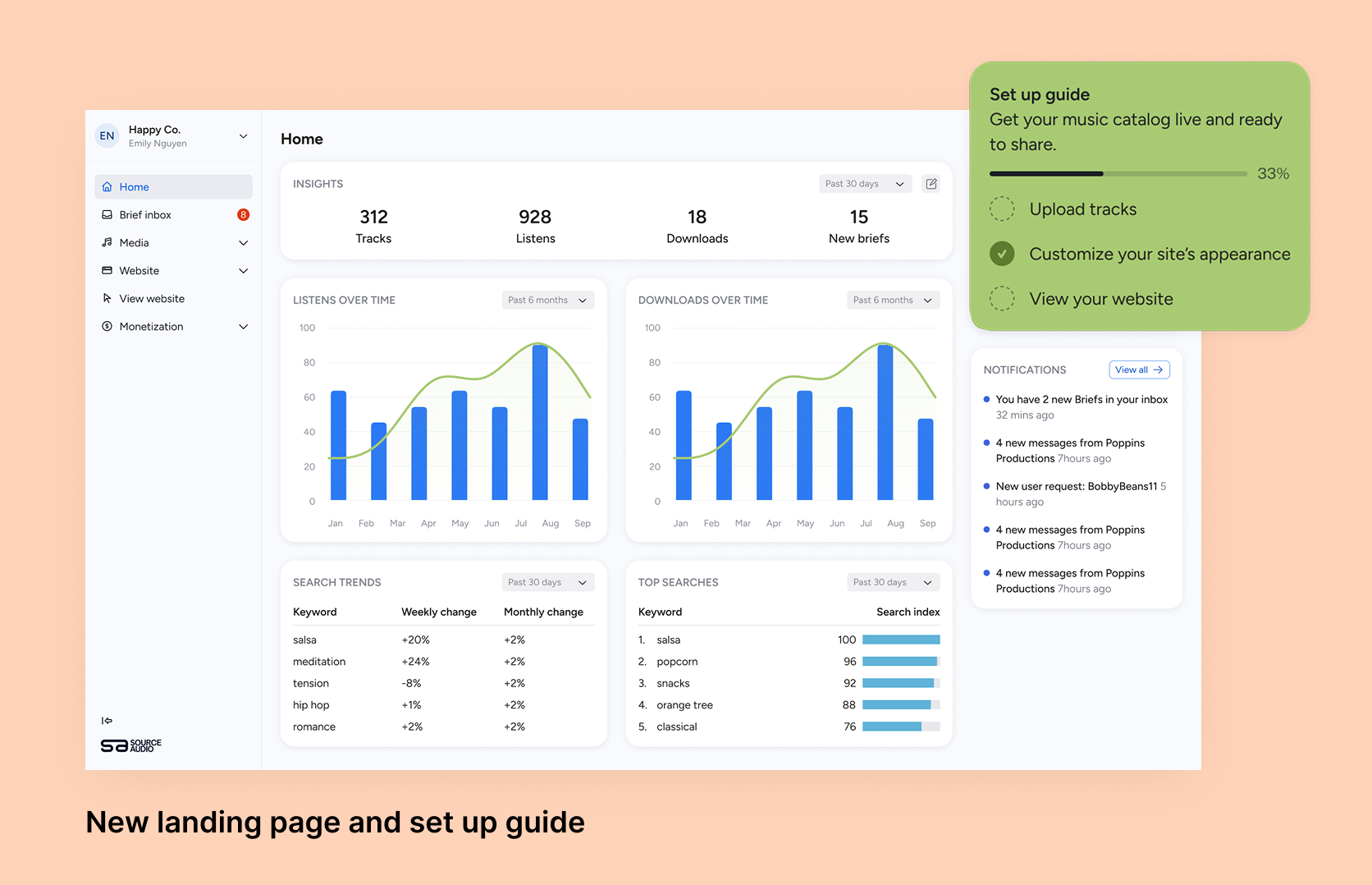
Fixing Foundations: How I restructured SourceAudio to be more intuitive for admins, new and old
For over a decade, SourceAudio has been adding features, expanding its reach, and growing alongside the music licensing industry. While our toolset has proven valuable to our client base, it’s important to acknowledge weaknesses that hav...[ READ MORE ]