
Reference Tracks: A Springboard to Better Mixes
Updated December 4, 2020
Selecting the right reference track and using it properly can be an incredible asset to your next mixing job.
What is a Reference Track?
A reference track can be any recording that you want a mix you’re working on to emulate.
Your reference track can be another track you’ve mixed or someone else track, and its exact purpose can vary depending on your approach to the mix. Your goal may be to create a commercially viable track that meets industry standards, which is a perfect application for a reference track. Alternatively, you may have total creative liberty over your project, and use a reference track to emulate and build off of a certain sonic element featured in your reference track.
In all cases, a mix engineer can listen to their reference track alongside their mix, flipping between the two, and get a good idea of what needs to change in their mix to reach their goal. Reference tracks are an irreplaceable tool for mix engineers to maintain their sonic bearings (especially after working many hours on a track) and create their best work.
Selecting the Right Reference Track
Traditional wisdom teaches that a reference track should be as sonically similar as possible to your desired final product. This is undoubtedly the universal starting point if this is your first time working with a reference track. When comparing any two mixes it can be astounding just how different they really are, even when they may have seemed similar from a distance. Start off trying to find an exact match, and experience all the variables available to finetune the sound of your mix.
Only after becoming comfortable with a “sound-alike” reference track should a mix engineer become any more daring with their reference track and seek to pull in elements from varied styles. If not done carefully, this practice can go terribly wrong, so take it slow and use your ears.
Using a Reference Track Effectively
When your mix is underway and you’re ready to do a side by side comparison with your reference track, get started by loading the reference track up into its own channel in your DAW so you can quickly and easily snap back and forth between the two.
Next, adjust the volume of your reference track so that it matches the level of your mix as closely as possible, being mindful of the different timbres in the track as well as the effect that mastering may have on a referenced track’s sound.
Once you have these two tracks side by side, the similarities and differences of the mix itself should become very clear. Check the reference mix against yours to compare and correct the following elements as needed:
1. The EQing of the track as a whole.
2. The dynamic range.
3. The level and frequency range of each instrument or sonic element.
Reference tracks may also provide a much needed moment of clarity if your track has become overly processed.
As you get to the end of the mixing process remember to test your mix everywhere your listeners will play your track through, e.g. car speakers, earbuds, laptop speakers, larger systems. Take your reference track there too and compare the final products.
Your mix is finished only when you’re completely happy with it. Put your reference track to work for you and get to a better finished product faster than ever before.

How Music For Sport runs a 180-album catalog across territories
Music For Sport has supplied music to every Summer and Winter Olympic Games since 1992. More than three decades and 180-plus albums later, the UK company's job hasn't changed: put high-quality production music in front of broadcas...[ READ MORE ]


YouTube Shorts monetization is now live. Here's what else is new in June.
June was a build-heavy month across our licensing, YouTube, and Collect businesses. We launched a major upgrade to our music-monitoring service, invested in faster and more accurate royalty processing, moved several enterprise integrations...[ READ MORE ]

The operational side of maximizing catalog revenue
One of the clearest indicators of long-term catalog health is whether there’s a real system of record behind it. By that we mean: a single place where the rest of the business can quickly confirm what a work is, who owns it, what iden...[ READ MORE ]

May at a Glance: A Product Update, the Brief Inbox, and a New AI Podcast
The Brief Inbox didn't slow down in May, and neither did we. Column customization shipped, and Drew made an appearance on Morning Brew's new AI podcast to talk music and AI. Drew on The Intelligence Shift Drew Silverstein, our Presid...[ READ MORE ]

Why Brands Are Moving Toward Aggregator-Driven Music Licensing
The way music gets licensed for advertising is changing at the infrastructure level. More brands and agencies are moving toward aggregator-driven ecosystems, where platforms like SourceAudio plug directly into proprietary music discover...[ READ MORE ]

April Recap: Luminate Summit, Blog Post, and What's Coming Through the Brief Inbox
Andrew Talks AI Training Data at Luminate Summit On April 15, SourceAudio CEO and co-founder Andrew Harding joined Doug Shapiro, Dave Davis, Dustin Blank, and Matthew Adell on "The AI Training Data Economy" panel at the Luminate Dat...[ READ MORE ]
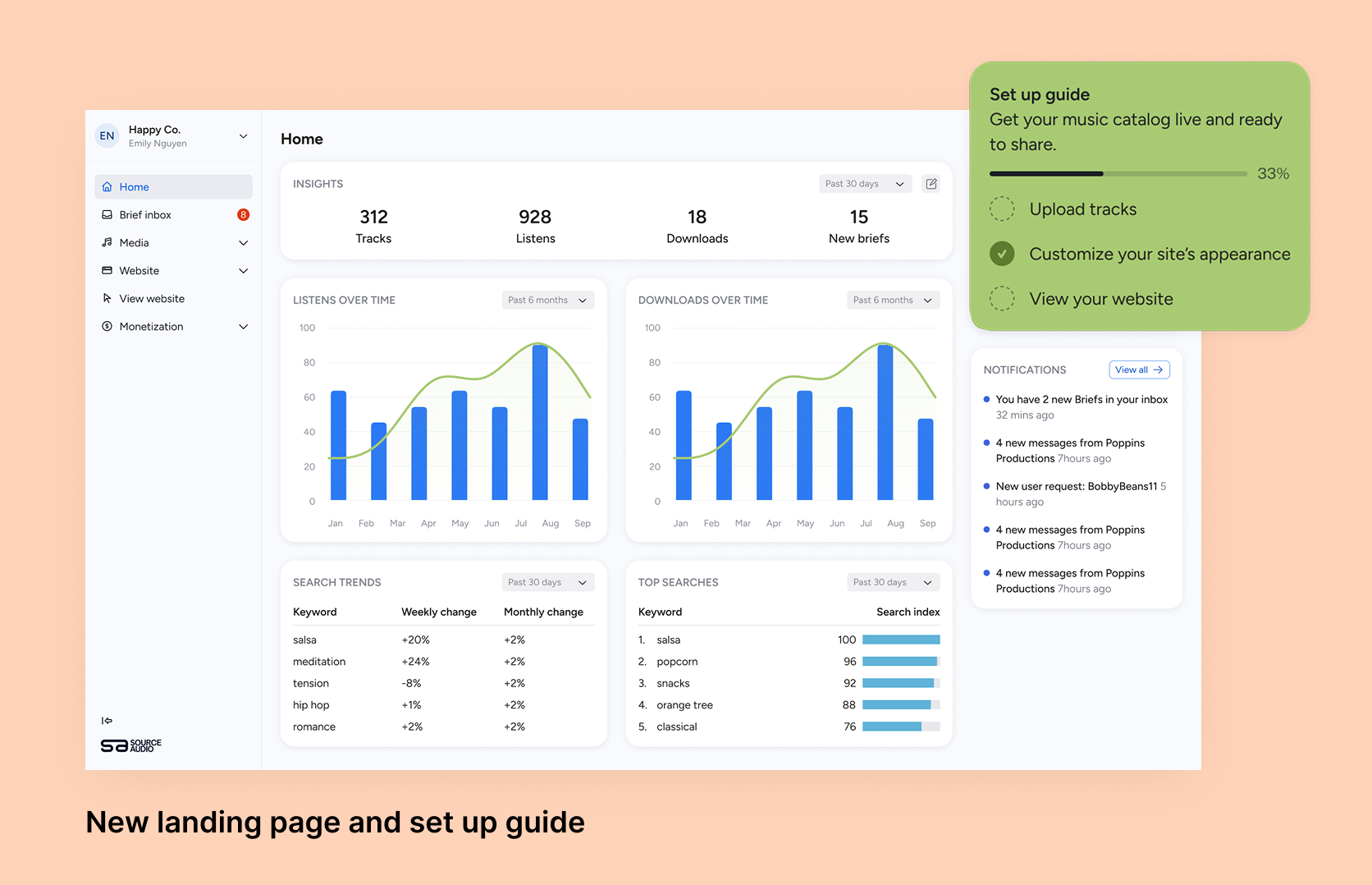
Fixing Foundations: How I restructured SourceAudio to be more intuitive for admins, new and old
For over a decade, SourceAudio has been adding features, expanding its reach, and growing alongside the music licensing industry. While our toolset has proven valuable to our client base, it’s important to acknowledge weaknesses that hav...[ READ MORE ]